I figure with gas prices continuing to go up for the forseeable future, it might be a signal to get more into DIY energy. We could get into it collectively. Is there an interest?
Cool. I was about to post a bunch of wind energy stuff. What's bad about it from a DIY perspective? Genuinely asking because I'm trying to learn the pros and cons.
I can give you my story for my family business. It’s more of a commercial venture but you might find parts of it interesting or informative.
Way back in 2001 we looked into putting up a 25kW windmill from a company called Integrity.
Cost was $200k installed. Expected pay back was "15-20 years". Lifespan is 20 years. So as a business we said "let's take a loan" so that's 20k/year for 10 years plus 4% interest which works out to $242,612.88 (That's $4261 a year just in interest.)
Now we had to add insurance in case something like a hurricane hits and destroyed it. That was a little over $1000/year.
Now we needed a maintenance plan as someone has to go up there and perform maintenance twice a year. Around $750/year.
Now we need an extended warranty as this $200k windmill only came with a 1 year warranty. So another $1k/year.
Next, we would be under powered because at the time any unused credits with maritime electric were removed on January 1st of every year. Basically, every time the windmill produced extra power you receive credits on your power bill. If you produce more power then you use they got to keep it for free... This has since changed to two years to use up the credits but they still get anything you don't use instead to paying you. So we were to still expect ~$100/month electrical bill still. (Another $1200/year)
So at the end of it we are looking at ~ $24k principle and interest, $1k insurance, $750 maintenance, $1k warranty and still a power bill of $1200. So nearly $28 000 a year for 10 years.. Our power bill was around $10k/year... So over 20 years the numbers don’t even come close.
Here is the kicker though. The company Integrity went bankrupt in 2005, every windmill they put up lasted 10 -15 years not the 20 claimed. Some only 5 years. Finally, the city of Charlottetown put one up at the city dump. It worked for less then 3 months and Integrity never fixed it, just stone walled them and then went under. The windmill still sits there to this day...not spinning.
At that point in time they were the only real major company around installing windmills of that size in PEI.
The company had a few government contracts and a few people had already gone ahead and had them installed. We took 15 min drive to look at one they had done and spoke with the owner. Typical stuff, everything on budget and went smooth.
The issue wasn't if they were legit. It's just the numbers didn't add up for anyone really, so no one but government and eco-nuts were willing to shell out that amount of cash on a "should last 20 years but we only offer a 1 year warranty"
Things have improved. Like I said you have two years to use up the credits now which helps with a seasonal business like mine where we are energy intense in the late winter/spring and dormant in the summer and fall.
Right now though solar makes the most sense with this credit system. Also, the cost to install enough solar to cover the whole electric bill is much cheaper then say installing a 30kw turbine which as the time was like $50k more.
Solar is also just a lot simpler too. No moving parts and what not.
Yeah. If lightbulbs are any indication on how estimated lifespan works, I would not want to go into a $200k bet to only marginally come out ahead in the best case.
Also the financing cost, or net present value. Breaking even in 20 years isn't even worth it in the best case.
My curiousity around wind is on the lower end of the scale for minimal power assurance. If the grid goes down at least you have something.
I'm leaning more with solar over wind because of the simplicity of solar. A panel array, batteries and an inverter from DC to AC and your good.
The draw back I see to solar (at least where I live) is that during winter months the energy production is so low that the company I consulted with recommends setting the panels to a sharp angle to prevent snow load and that from November to February not to even bother cleaning the snow off them. So keep that in mind.
I curious, have you come up with anything for a wind powered back up yet?
Kreosan, some Ukrainian guy, bought used/broken solar panels, fixed them up and made a homemade/DIY solar panel that works rather well for the price, although it takes technical skill and knowledge, but hell, learning is half of the fun.
Honestly with how much broken things that aren't really broken or easily fixable without much knowledge, you can either make good money or have everything you want without buying or spending much.
I don't know about making money fixing things. The problem is both the Chinese and US tax payer subsidize about every layer of the Chinese manufacturing and distribution chain. The result is there are a lot of things that are near free out of China that shouldn't be. The majority of cost you pay for things is distribution. And even that is subsidized. If you repair something you have to ship it back to someone. And that isn't subsidized. It costs more to ship between American businesses than it does to ship from China.
But you really can have anything you want for free if you can repair stuff.
But you have to find local broken stuff or you are paying for shipping again. The only thing you can make money fixing is stuff that is so expensive to ship and install that it is easier to ship you to the site to fix it. HVAC basically.
When I was 13, I bought a Walkman from a garage sale for $15 that didn't work, and a B&W 9 Inch TV Set for $5, which wouldn't show broadcasting. I opened up the Walkman, and the belt was off the loop, so I put it back on the loop, and it worked. I got an antenna for the B&W TV Set and stuck a metal coat hanger for UHF, and it worked. I soon learned how to fix computers. I taught this to my son, and now he fixes cars and electric generators, and he drives around with a truck.
Right. But that was for your own consumption. And that was also in a different era. I guess there are successful phone repair shops. But if it's not a phone, an HVAC system, or a car, there is a reason why there isn't a market for fixing it, or will charge double the cost of a new one (essencially hyper low volume businesses that rely on a few high paying customers).
I remember years ago, weed was illegal, there was a store that sold lamps near me, it secretly had a weed grow operation in the basement, and the lamps were to explain why they used a lot of electricity.
Mainly to fix or install fridges, dishwashers, washing machines. Kinda like if somethings expensive enough, you'd pay to fix it, but if the cost is comparable to a brand new appliance just buy a brand new one. If a toaster breaks do you hire a repair man to fix it, no they're like $20 and it'd cost more to fix it. If you're handy you can fix a toaster but it'd still take time and you might want to spend your time on something more profitable.
Biodesiel is a good idea as an alternative to oil. The Amish use it and they use sunflowers that grow easily enough and put them through a press and filter. You can use corn and other seed oils.
Yea but good luck finding those that are in good condition or are not fucked by emission regulations as in not allowed to drive somewhere, being forced to pay more tax or tax upon driving.
Even then like for me, I like crossovers like my Captiva and that in Europe is only euro 4 and euro 5, respectively C100 and C140, but at that point am going petrol and LPG if I ever switch my C100 diesel to C140 petrol v6.
Could go for an older car but I like things like bluetooth and some other comfort things, bare minimum is CD player and Aux for music, AC and maybe cruise control.
I think in the future anaerobic digestion will be big for energy, China is doing it, all our organic waste, food garbage, sewage, animals manure, can be used for energy. Tiny organisms eat the waste and fart out methane. This can be free energy like wind and solar.
 Log in

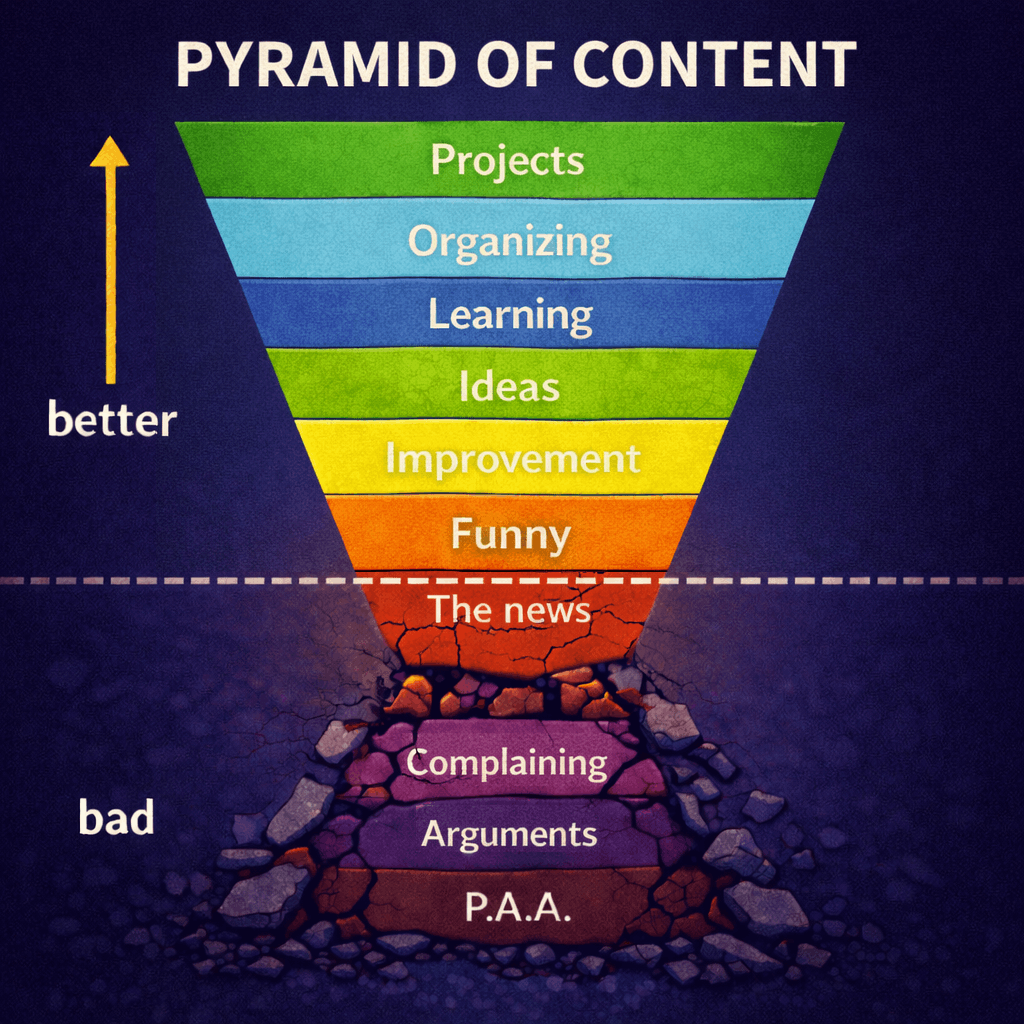


I'm particularly interested in discussions about hydrogen power. And I'm more the willing to trash wind energy with anyone who is up for it!
Cool. I was about to post a bunch of wind energy stuff. What's bad about it from a DIY perspective? Genuinely asking because I'm trying to learn the pros and cons.
I can give you my story for my family business. It’s more of a commercial venture but you might find parts of it interesting or informative.
Way back in 2001 we looked into putting up a 25kW windmill from a company called Integrity.
Cost was $200k installed. Expected pay back was "15-20 years". Lifespan is 20 years. So as a business we said "let's take a loan" so that's 20k/year for 10 years plus 4% interest which works out to $242,612.88 (That's $4261 a year just in interest.)
Now we had to add insurance in case something like a hurricane hits and destroyed it. That was a little over $1000/year.
Now we needed a maintenance plan as someone has to go up there and perform maintenance twice a year. Around $750/year.
Now we need an extended warranty as this $200k windmill only came with a 1 year warranty. So another $1k/year.
Next, we would be under powered because at the time any unused credits with maritime electric were removed on January 1st of every year. Basically, every time the windmill produced extra power you receive credits on your power bill. If you produce more power then you use they got to keep it for free... This has since changed to two years to use up the credits but they still get anything you don't use instead to paying you. So we were to still expect ~$100/month electrical bill still. (Another $1200/year)
So at the end of it we are looking at ~ $24k principle and interest, $1k insurance, $750 maintenance, $1k warranty and still a power bill of $1200. So nearly $28 000 a year for 10 years.. Our power bill was around $10k/year... So over 20 years the numbers don’t even come close.
Here is the kicker though. The company Integrity went bankrupt in 2005, every windmill they put up lasted 10 -15 years not the 20 claimed. Some only 5 years. Finally, the city of Charlottetown put one up at the city dump. It worked for less then 3 months and Integrity never fixed it, just stone walled them and then went under. The windmill still sits there to this day...not spinning.
Way back in 2001 we looked into putting up a 25kW windmill from a company called Integrity.
I'd stop right there did you do any research on this company or just trust them cuz they're called Integrity.
At that point in time they were the only real major company around installing windmills of that size in PEI.
The company had a few government contracts and a few people had already gone ahead and had them installed. We took 15 min drive to look at one they had done and spoke with the owner. Typical stuff, everything on budget and went smooth.
The issue wasn't if they were legit. It's just the numbers didn't add up for anyone really, so no one but government and eco-nuts were willing to shell out that amount of cash on a "should last 20 years but we only offer a 1 year warranty"
Well that was in 2001 maybe it's better now.
Things have improved. Like I said you have two years to use up the credits now which helps with a seasonal business like mine where we are energy intense in the late winter/spring and dormant in the summer and fall.
Right now though solar makes the most sense with this credit system. Also, the cost to install enough solar to cover the whole electric bill is much cheaper then say installing a 30kw turbine which as the time was like $50k more.
Solar is also just a lot simpler too. No moving parts and what not.
Yeah. If lightbulbs are any indication on how estimated lifespan works, I would not want to go into a $200k bet to only marginally come out ahead in the best case.
Also the financing cost, or net present value. Breaking even in 20 years isn't even worth it in the best case.
My curiousity around wind is on the lower end of the scale for minimal power assurance. If the grid goes down at least you have something.
Lightbulbs made with planned obsolescence. They could last longer.
I'm leaning more with solar over wind because of the simplicity of solar. A panel array, batteries and an inverter from DC to AC and your good.
The draw back I see to solar (at least where I live) is that during winter months the energy production is so low that the company I consulted with recommends setting the panels to a sharp angle to prevent snow load and that from November to February not to even bother cleaning the snow off them. So keep that in mind.
I curious, have you come up with anything for a wind powered back up yet?
Sun comes and goes, wind comes and goes, battery tech is the key, need to be able to store more efficiently. Africa is where most cobalt is.
Agreed
Kreosan, some Ukrainian guy, bought used/broken solar panels, fixed them up and made a homemade/DIY solar panel that works rather well for the price, although it takes technical skill and knowledge, but hell, learning is half of the fun.
Honestly with how much broken things that aren't really broken or easily fixable without much knowledge, you can either make good money or have everything you want without buying or spending much.
I don't know about making money fixing things. The problem is both the Chinese and US tax payer subsidize about every layer of the Chinese manufacturing and distribution chain. The result is there are a lot of things that are near free out of China that shouldn't be. The majority of cost you pay for things is distribution. And even that is subsidized. If you repair something you have to ship it back to someone. And that isn't subsidized. It costs more to ship between American businesses than it does to ship from China.
But you really can have anything you want for free if you can repair stuff.
But you have to find local broken stuff or you are paying for shipping again. The only thing you can make money fixing is stuff that is so expensive to ship and install that it is easier to ship you to the site to fix it. HVAC basically.
When I was 13, I bought a Walkman from a garage sale for $15 that didn't work, and a B&W 9 Inch TV Set for $5, which wouldn't show broadcasting. I opened up the Walkman, and the belt was off the loop, so I put it back on the loop, and it worked. I got an antenna for the B&W TV Set and stuck a metal coat hanger for UHF, and it worked. I soon learned how to fix computers. I taught this to my son, and now he fixes cars and electric generators, and he drives around with a truck.
Right. But that was for your own consumption. And that was also in a different era. I guess there are successful phone repair shops. But if it's not a phone, an HVAC system, or a car, there is a reason why there isn't a market for fixing it, or will charge double the cost of a new one (essencially hyper low volume businesses that rely on a few high paying customers).
How do appliance repair shops make money? Are they secret CIA safehouses?
Aren't those dead? And yes. I knew a guy that ran a flower shop that was one. His own children didn't know until he retired.
I remember years ago, weed was illegal, there was a store that sold lamps near me, it secretly had a weed grow operation in the basement, and the lamps were to explain why they used a lot of electricity.
https://www.angi.com/nearme/appliance-repair-companies/ Still advertising on Angi.
Mainly to fix or install fridges, dishwashers, washing machines. Kinda like if somethings expensive enough, you'd pay to fix it, but if the cost is comparable to a brand new appliance just buy a brand new one. If a toaster breaks do you hire a repair man to fix it, no they're like $20 and it'd cost more to fix it. If you're handy you can fix a toaster but it'd still take time and you might want to spend your time on something more profitable.
Biodesiel is a good idea as an alternative to oil. The Amish use it and they use sunflowers that grow easily enough and put them through a press and filter. You can use corn and other seed oils.
Really depends on the car, modern cars with tight injectors get gunked up easily, euro 4 cars can't do that.
Euro 3 and older, sure, but even then the filters can get gunked up.
Well, maybe on older cars that can't be shut down, overridden like newer cars.
Yea but good luck finding those that are in good condition or are not fucked by emission regulations as in not allowed to drive somewhere, being forced to pay more tax or tax upon driving.
Even then like for me, I like crossovers like my Captiva and that in Europe is only euro 4 and euro 5, respectively C100 and C140, but at that point am going petrol and LPG if I ever switch my C100 diesel to C140 petrol v6.
Could go for an older car but I like things like bluetooth and some other comfort things, bare minimum is CD player and Aux for music, AC and maybe cruise control.
I think in the future anaerobic digestion will be big for energy, China is doing it, all our organic waste, food garbage, sewage, animals manure, can be used for energy. Tiny organisms eat the waste and fart out methane. This can be free energy like wind and solar.